
Mambas in the Park: Connecting Africa’s Future Leaders with the Wild – July 2026
What happens when children swap television screens for campfires, and classrooms and textbooks are complimented by game drives, and the sights and sounds of the African bush? In our experience, they begin to truly see and read nature.
By Valeria van der Westhuizen
What happens when children swap television screens for campfires, and classrooms and textbooks are complimented by game drives, and the sights and sounds of the African bush?
In our experience, they begin to truly see and read nature.
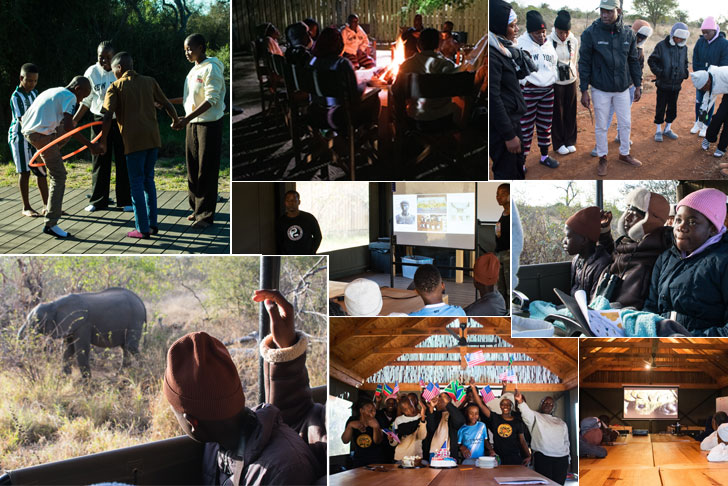
That is exactly what Mambas in the Park, a collaborative initiative between Global March for Elephants and Rhinos (GMFER), Transfrontier Africa, Koru Camp is about. Every month, Black Mamba rangers, youth leaders, and Mambas’children gather for an unforgettable conservation camp that nurtures curiosity, leadership, and a lifelong connection with the natural world.
The most recent camp, held from 3–5 July, focused on one of Africa’s most iconic predators—Lions.
Learning Through Experience
From 3 to 5 July, Black Mamba rangers, youth leaders, and the children of Hluvukani traded a weekend at home to an adventure in the Koru Camp, headed by The Black Mamba Nkateko Mzimba.
When we arrived to camp, we were warmly welcomed by our guide Koki and amazingly friendly and smiley ladies who would cook meals for us every day.
The next two days are going to be fun!
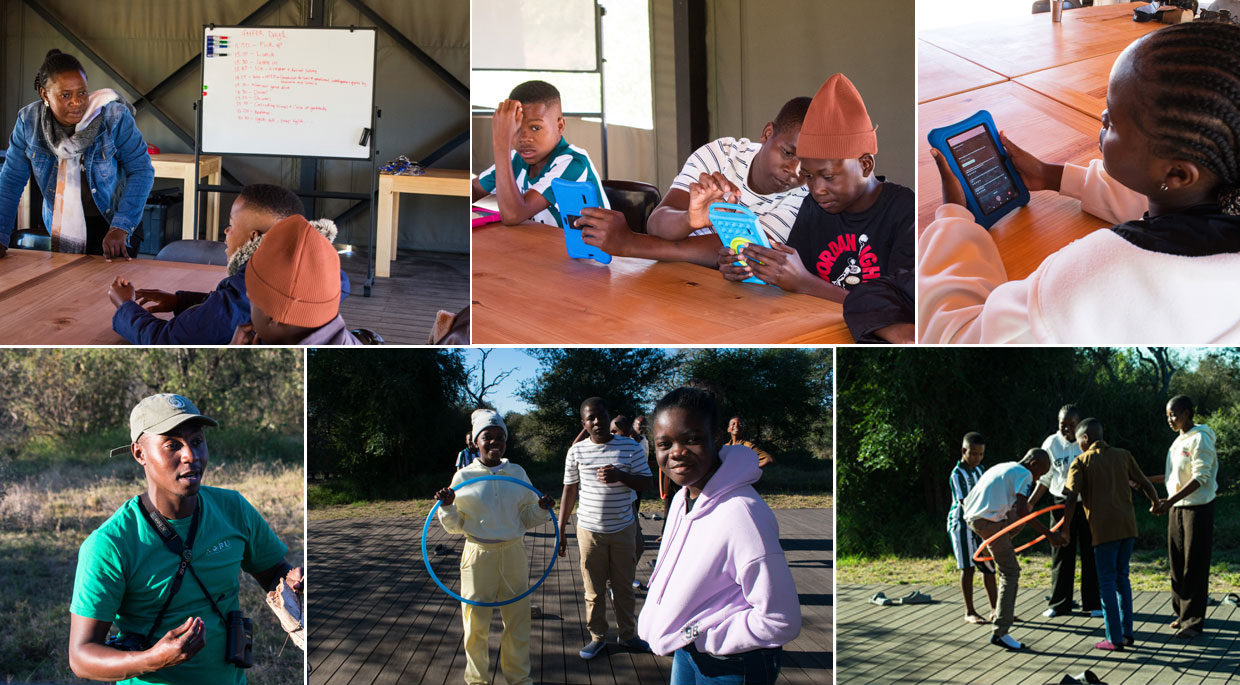
The topic of this camp trip was Lions and Lion body parts trade. Foundational workshops about Lions and their behavior and ecology were co-led by Black Mamba Sergeant Nkateko Mzimba, the guides at KORU camp and program facilitator Valeria van der Westhuizen. We explored the fascinating world of lions through interactive workshop, conservation games, riddles and storytelling around the campfire.
Our fantastic guides played wildlife-themed Pictionary and conservation charades with the kids, and learnt how scientists identify individual lions by the unique patterns of spots where their whiskers grow. Not many people know this, and we decided this fact could add up to our workshops and the awareness of our children.
Evenings around the fire were incredibly funny and entertaining thanks to jokes and riddles, memes and broken telephone game. If you play these with your kids, we promise you, you will discover new talents in acting and see how amazingly smart children are.
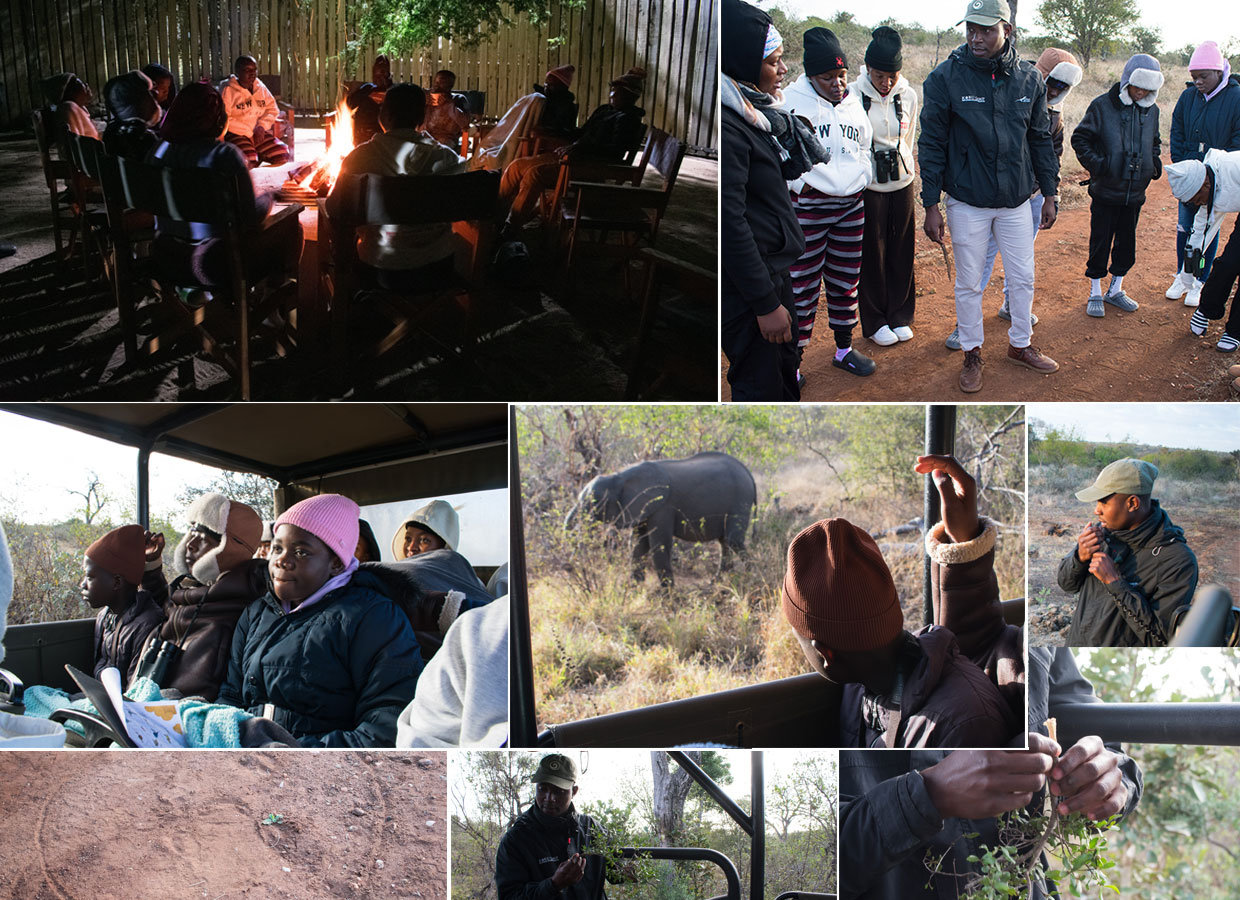
Some of the greatest lessons came during early morning game drives.
We encountered a magnificent tower of giraffes, watched a herd of elephants moving through the bush, examined an active rhino midden, followed the tracks of a hyena before spotting the animal itself, and learnt to identify some trees including the Leadwood, Tamboti, Apple-leaf, and the beautifully named Magic Guarri.
We incorporate contemporary science into an already familiar framework of traditional knowledge about animals and plants, and especially the use of plants in medical purposes. We all were interested in why Magic Guarri (Euclea divinorumhas) has such a name. Apparently, the plant has chemical compounds that help fight bacteria that causes teeth cavities, and it has even been tested in labs! More research on safety for humans is to be done though.
Apple-leaf tree made everyone laugh, as kids would crunch the leaves, pretending they were eating apples. When you crunch an Apple-tree leaf in your hands, it makes a sound as if somebody indeed is biting a piece of an apple.
Learning from Someone Who Lives Conservation Every Day
One of the leaders of the many educational sessions is Black Mamba Sergeant Nkateko Mzimba, whose passion for sharing knowledge has become one of the programme’s greatest strengths.
Nkateko has been a Black Mamba ranger for the last 12 years and a few years ago started her own initiative called Nkateko Hluvukani Foundation which aims to help the locals with basic subsistence and clothing, and environmental education classes in her future centre.
Over the years, environmental education has become more than just another responsibility for Nkateko—it has become a calling.
“Being an environmental educator in the bush is very important because that’s where we connect to nature. Teaching people here makes me happy, and I enjoy sharing wildlife with children because I’m part of protecting it.”
Although she has spent years working in conservation, she says the programme revealed a talent she never knew she had. “I’ve been working in the bush for years, but I never realised I had the skills of a teacher. Since I started doing these workshops, I’ve discovered that I really enjoy teaching people about nature.”
Nkateko believes that education is one of conservation’s most powerful tools.
“Many people don’t have enough knowledge about the bush. That’s one of the reasons I dedicated myself to teaching people in our communities so they can understand why it’s important to protect our natural heritage.”
One of the most rewarding parts of the programme, Nkateko says, is seeing children’s dreams begin to take shape. “When we connect children with wildlife, we’re investing in the future. Some of them now want to become trackers, guides or rangers. That’s why I invest myself into making a difference in the community.”
Nkateko has also witnessed the impact that repeated visits to Koru Camp have had on participating families. “Many of the children knew very little about the bush before this project started. Now they understand why nature is important, and they go home and share what they’ve learnt with their friends and families.”
“Many of the children knew very little about the bush before this project started. Now they understand why nature is important, and they go home and share what they’ve learnt with their friends and families.”
Young Leaders Finding Their Voice
A unique aspect of Mambas in the Park program is the involvement of youth leaders, who help mentor younger participants while developing their own leadership skills.
For Lunghisani Mzimba, the weekend was about much more than wildlife.
“I learnt how to build my confidence in front of people I didn’t know. Nature isn’t only about animals—it also teaches respect and patience.”
The lion workshop introduced him to something completely new.
“I learnt that lions have different whisker spot patterns and that their scientific name is Panthera leo.”
One of his favourite sightings was a breeding herd of elephants. “Elephants live in family groups led by a female called the matriarch.”
Being a camp leader has also helped shape his future. “It gives me more confidence to lead people by example and encourages me to stay focused on nature.”
For fellow youth leader Acacia Mzimba, one of the biggest lessons was understanding how every part of nature is connected.
“The wild isn’t about power—it’s about patience and knowing when to move. What struck me the most wasn’t just one animal, but how everything in nature is connected.”
Acacia too was fascinated by learning how researchers identify individual lions using their whisker spot patterns.
“What surprised me was that you can tell lions apart by their whiskers and understand what the tuft of hair means.” Her time as a camp leader has inspired her beyond conservation. “It is helping us become leaders for the future.”
Investing in the Next Generation
Conservation is not only about protecting wildlife today—it is about inspiring the people who will protect it tomorrow.
Through partnerships, passionate educators like Sergeant Nkateko Mzimba, skilled guides at Koru Camp, and immersive experiences in one of South Africa’s most remarkable wilderness areas, Mambas in the Park is giving young people the knowledge, confidence and inspiration to become ambassadors for nature in their own communities.
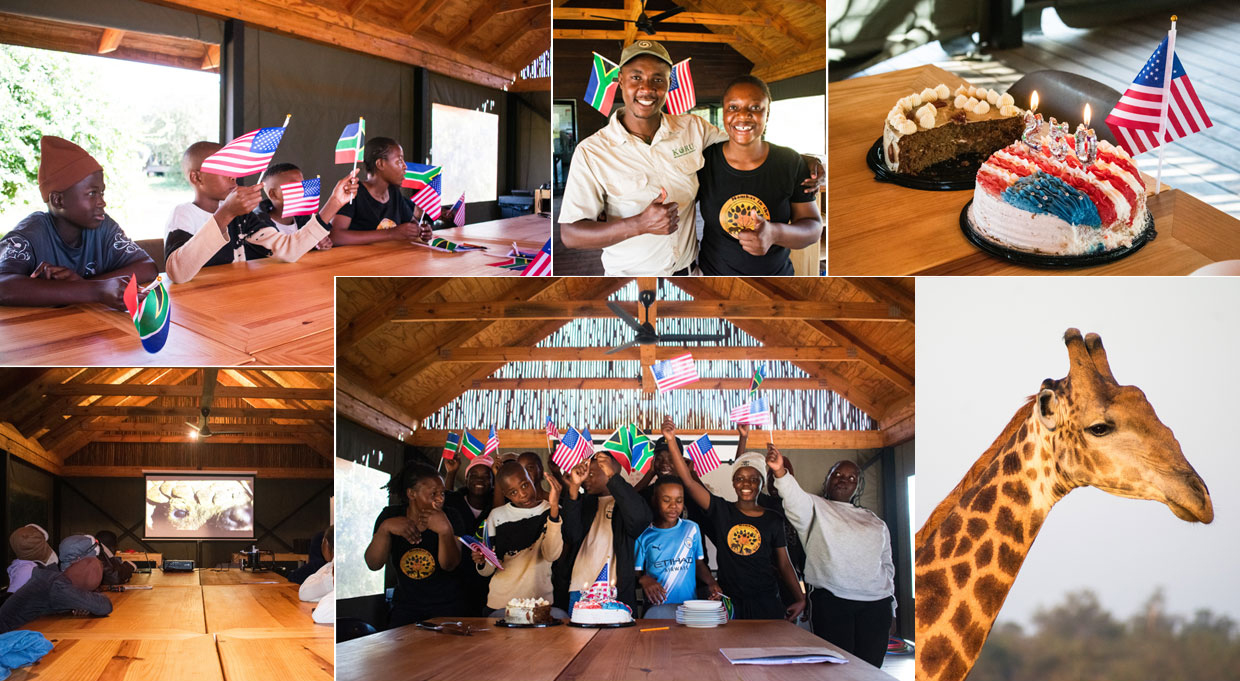
This time we celebrated the 250th anniversary of the United States of America, sharing songs and two cakes. One of them was decorated with the flag of the USA. We could not hold back and did some Happy Birthday singing and dancing. It was fun and reminded us that even though we come from different cultures, there is something bigger that unites us – our planet, and shared values around the well-being of wildlife and people.
Every campfire conversation, every game drive, every wildlife sighting and every new discovery plants another seed.
One day, those seeds may grow into the next generation of rangers, trackers, guides, scientists and conservation leaders who will continue protecting Africa’s extraordinary natural heritage.
Mambas in the Park is a GMFER initiative with partnership and support from Transfrontier Africa. Our thanks to KORU camp and its dedicated guides and staff for amplifying our work.
Stay tuned for more updates from the Mambas in the Park program, and join us in our mission to inspire a love of wildlife and conservation in the next generation of African leaders!
Every problem has a solution, every solution needs support.
The problems we face are urgent, complicated, and resistant to change. Real solutions demand creativity, hard work, and involvement from people like you.

Stay in the know.
Be ready to act.
To keep up to date with our latest news, events, marches,
campaigns and fundraising activities.