
Mambas in the Park: Where the Bush Is Our Classroom – Koru Camp, August 2026
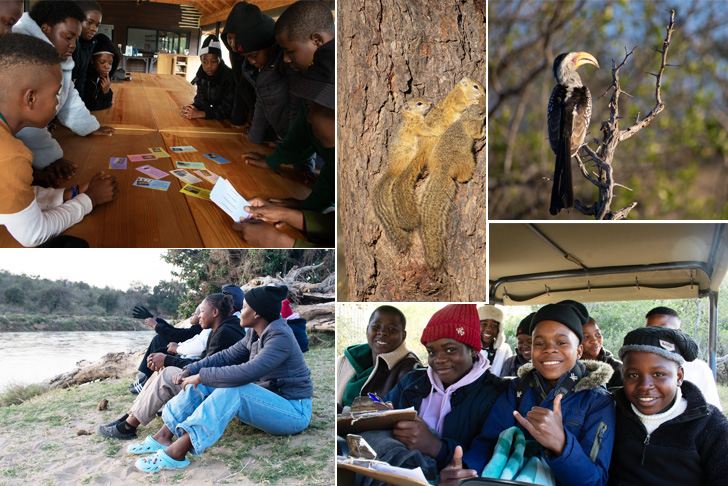
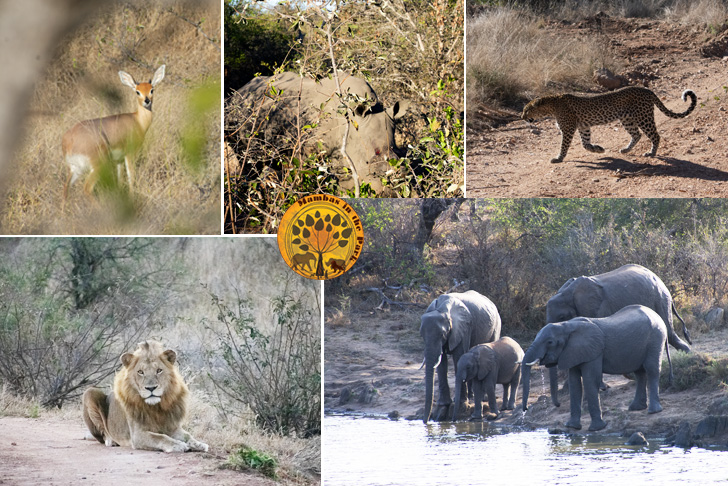
August at Koru Camp was a weekend of learning, teamwork and unforgettable wildlife encounters. Our young leaders continued their FGASA preparation through workshops on mammals, rhinos, tracks, signs and bird identification, while putting their knowledge into practice on game drives. With sightings of all of Africa’s Big Five, including a young leopard, lion and an incredible herd of elephants, it was another reminder that at Mambas in the Park, the bush is truly our classroom.
By Valeria van der Westhuizen
Every time we get ready for Koru Camp, it feels like a new adventure — we never know what we will see in the bush, and we never know what the Koru guides have prepared for us to learn.
We must say, this one weekend per month is a special time, and we are all looking forward to it.
In August, we were absolutely blessed with superb sightings, incredible teamwork, and just an amazing time among like-minded people who share our love for the natural world and every living being that inhabits it.
We are currently in the process of redesigning our workshops to align them with the FGASA learner book content, so that we can prepare our youth leaders for the FGASA Junior exam they will have to take in 10–12 months.
The book has some really serious content to learn and absorb! Our learners will have to do some work, and we are going to help them all along.
The idea of preparing Lunghisani and Acacia for the FGASA exam came after many campouts and us refining the program, and now the program has a beautiful new vision, where we are happy to assist young people in laying a proper foundation for their future FGASA Level 1 studies and acquiring a real profession in the wildlife industry.
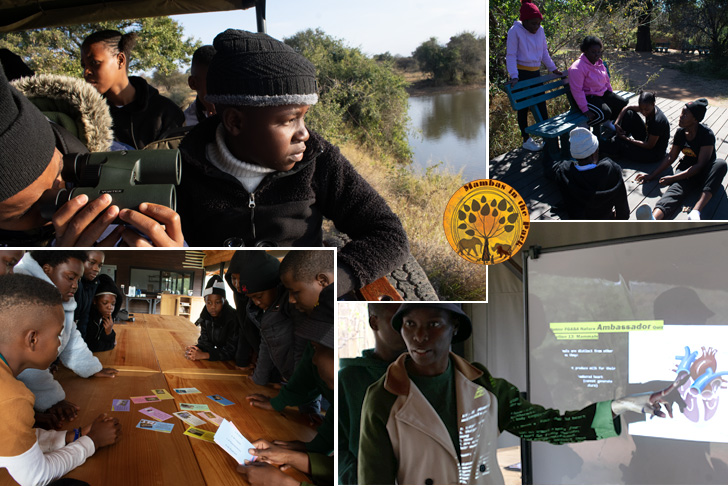
To introduce the FGASA system, we designed a workshop as a sample test from the workbook, to get the children familiar with how the test is structured. We chose the module on mammals so that it would match the second workshop on rhinos.
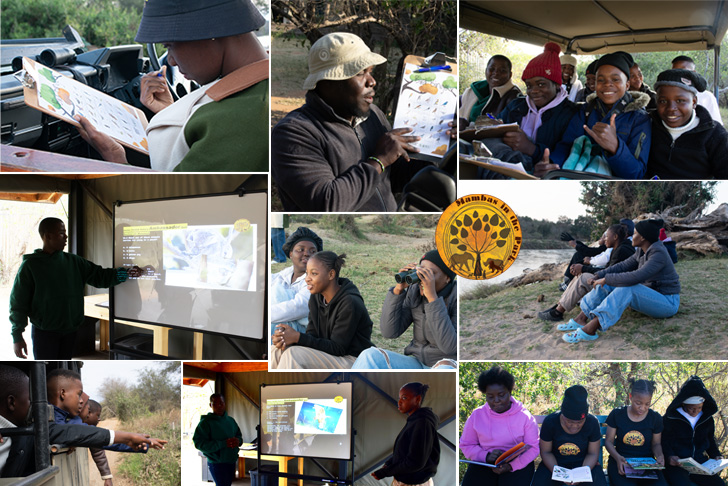
The FGASA workshop was led by Lunghisani and Acacia with the help of Black Mamba ranger Tsakane Nxumalo. Tsakane has been studying toward her diploma in teaching at the University of South Africa and has a good grasp of teaching methods, which she used successfully. “Even though the kids come from different backgrounds, this weekend their teamwork was out of this world,” says Tsakane.
One curious fact the kids learned was that some mammals actually lay eggs — the echidna and the platypus! Both are endemic to Australia. Our Youth Leader Acacia says, “After the class, I realized there was a lot of interesting things about animals that I need to learn, and I am excited to do it! Every time I learn something new about animals, I see how much respect we as humans should have for them.” Working together on presentation is one of our teaching methods but also a good opportunity to develop communication and teamwork skills. Lunghisani’s experience is a living proof, as he says “one of then most memorable moment over this weekend was teaching the workshop together with Acacia”.
The second workshop was about rhinos and the rhino horn trade. As complex as this topic is, we think it’s important that the children are aware of the current illegal wildlife trade issues happening in the country. What a challenging topic John Hume’s case was! It definitely deserves a separate workshop to fully learn and understand all the details. On the subject of learning styles, Tsakane pointed out that “some kids learn well with their hands, others through visuals. These qualities should be nurtured in the learning environment to help build healthy self-confidence.”
Game drives were absolutely fantastic, with Bongani as our guide and guardian in the bush. We saw all members of the African Big 5 in two days, along with lots of other mammals and birds.
As Acacia recalls, “Seeing the Big 5 was very special. One morning we were driving out of camp, and as we turned to the right from it, there it was — a young leopard, completely on its own! It was so sudden, I froze for a second and thought to myself that I shouldn’t move or even blink. The leopard was calm, though — once it made sure we weren’t a threat, it came out of the bush and calmly crossed the road. It was such an amazing sighting! I think I heard our facilitator Valeria say, ‘Guys, how awesome is that?'”
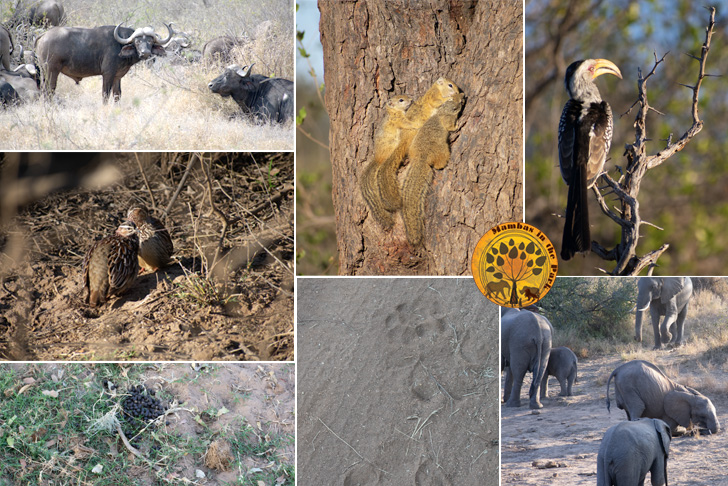
One of the most interesting activities at camp was the Tracks and Signs game. To say it was interesting and engaging would be underselling the whole experience. When Bongani put photos of animals and their tracks in front of us and said we should match them with the right animal, we knew it was going to be fun and challenging at the same time — mostly because some animals have very similar tracks that are easy to confuse. “For me, the Tracks and Signs game wasn’t difficult, but the honey badger is still the one that confuses me,” says Acacia. For Lunghisani it was warthogs tracks that were most challenging.
The game is a great way to train observation skills and memory. Later in the day, we had a great chance to see and identify the tracks of an adult hippo and a huge lion in the same spot. Many people don’t know how to tell a lion’s tracks from a leopard’s, and we must say, in the real bush it isn’t easy. Luckily, we have Bongani, who can teach us how to do it both in the classroom and in the bush. Learning in the classroom gives us guidelines to follow; learning in the bush is something totally different and gives that learning real ground to stand on. Nothing beats practical experience.
On every game drive, we play Bird Bingo. Each learner gets a list of birds with names, and they cross them off as they spot them, ticked off in a row or column. It’s fun and keeps the kids attentive during the drive. We learned from Bongani that if doves lay two eggs and find one broken, they will abandon the second one and nest somewhere else. This happens because a broken egg signals that the area isn’t safe, so they won’t invest energy in guarding the second egg and would rather find a better place to nest. A lot of animal behavior can be explained by how an animal spends and preserves its energy, but we’ll learn more about that later in our FGASA workshops. As Lunghisani noticed after the workshops, “I’m willing to put more effort into learning hard so that I can become a field guide in the future”.
Another highlight was seeing a young adult male lion. He’s still developing his mane, so it wasn’t as large and full yet — instead, he had a little mohawk on top of his head, which will later grow into a full mane.
What would we do without elephants? We were blessed with a whole herd at the dam — moms, babies learning from their mothers how to drink water with their trunks, and teenagers mock-fighting. One young elephant was doing tricks in the sand, dropping to its knees and putting its face right into it. Another approached us with obvious courage to express its discontent. Honestly, we held our breath. But because we stayed quiet and didn’t run our engine, the elephant decided not to make a big deal of our presence and shook its head — its final word — before heading down to the dam.
“Amazing would be an understatement,” shares Tsakane Nxumalo. “I truly loved seeing the determination in the kids at camp — with temperatures at -7 degrees in the morning, right before the game drive, they were out there spotting birds and enjoying great sightings of the Big 5. Mother Nature was in full bloom this weekend.”
Days like these remind us why Koru Camp exists in the first place: to hand young people a torch of curiosity and let the bush itself do the teaching. Every sighting, every track in the sand, every quiet moment of holding our breath together builds something in these kids that no classroom alone ever could. We can’t wait to see what September has in store — join us next month as our young leaders take another step closer to becoming the wildlife guardians of tomorrow.
 |
 |
 |
 |
Mambas in the Park is GMFER initiative with partnership and support from Transfrontier Africa.
Our thanks to KORU Camp and its dedicated guides and staff for amplifying our work.
Every problem has a solution, every solution needs support.
The problems we face are urgent, complicated, and resistant to change. Real solutions demand creativity, hard work, and involvement from people like you.

Stay in the know.
Be ready to act.
To keep up to date with our latest news, events, marches,
campaigns and fundraising activities.