
Mambas in the Park: Foundation of Life – Koru Camp, October 2026
Discover how the October camp at Koru Camp took our young leaders on a journey from the stars above to the intricate connections of the African bush. Through astronomy, ecology, exciting wildlife encounters and hands-on science experiments, the youth leaders explored the wonders of nature while building knowledge, confidence and skills for their future in conservation.
By Valeria van der Westhuizen
From Earth to the Stars
Astronomy is a subject many of us know surprisingly little about. Yet, in a sense, it is the study of everything. Sounds strange? Everything?
Yes, you read that right.
Astronomy explores the origins and evolution of the universe, the formation of stars and planets, and the cosmic processes that made life on Earth possible. Our story began around 13.8 billion years ago with the Big Bang, followed by billions of years of cosmic evolution before Earth and, much later, life as we know it came into existence.
During our October camp at Koru, we explored Astronomy and Ecology as part of the FGASA learning requirements. And what better way to begin discovering the natural world than with a little reminder of how extraordinary it is?
The Big Five before we even arrived!
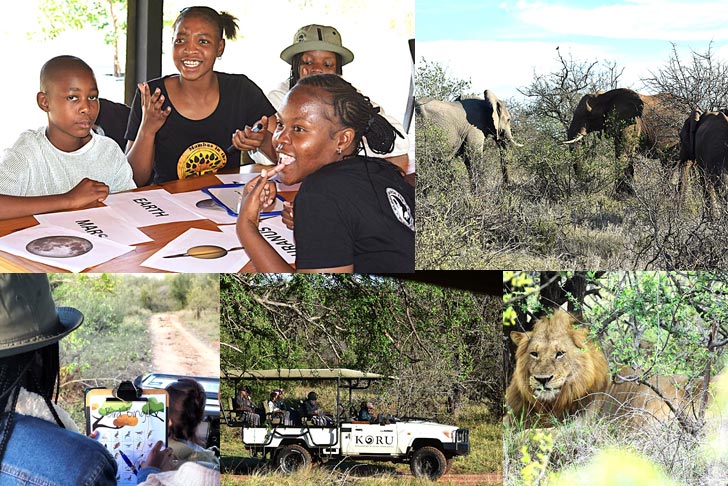
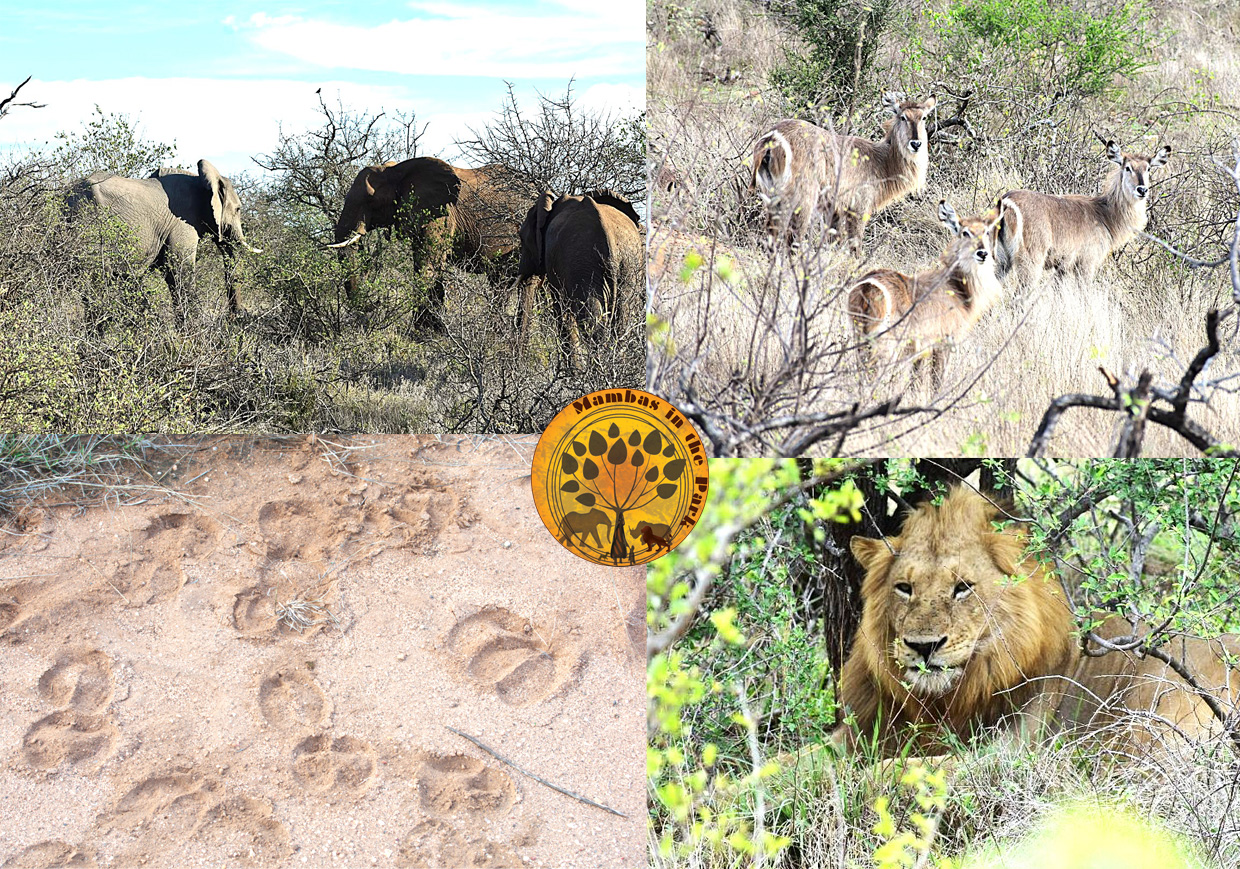
Hardly had we reached the gate of Jejane Nature Reserve when some of the children spotted lions! And that was only the beginning. On our way to Koru Camp, we managed to see the other four members of the Big Five.
All five in a single journey, before we had even reached our destination! It was quite a start to our camp and a wonderful reminder that, in the African bush, you never quite know what awaits you around the next corner.
Looking up: discovering the Moon and the stars
One of our astronomy topics was the phases of the Moon. Alongside the scientific explanations, our guides, Beki and Koki, shared local stories about how people used the Moon in the past to help identify the harvest period.
It was a great opportunity to connect what we learn in science with traditional knowledge and the ways people have observed and understood nature over generations.
Then came one of those facts that makes you look at the night sky differently: the stars that form a constellation may be incredibly far apart from one another. They appear close together only because we see them from our particular viewpoint on Earth. A constellation is a pattern we recognise in the sky, not necessarily a group of stars that are physically close to each other.
We also explored how our location on Earth influences the constellations we can see. Some are visible mainly from the Northern Hemisphere, others from the Southern Hemisphere, while some can be observed from both. Even when the same constellation is visible, its orientation can look very different depending on where you stand. Orion, the Hunter, for example, appears upside down to observers in South Africa compared with its familiar orientation in the Northern Hemisphere.
Suddenly, the night sky became much more than a collection of tiny lights. It became a map shaped by our position in space.
Orion and the Scorpion: a story written in the stars
Everybody loved the myth of Orion and the Scorpion! Curious to discover the story behind these two fascinating constellations?
Watch this short video by Free School to discover the ancient Greek myth of Orion, the Hunter, and Scorpius, the Scorpion.
A note for our Southern Hemisphere stargazers: the video refers to summer in July, reflecting a Northern Hemisphere perspective. Here in South Africa, July is winter! Scorpius is a prominent feature of our winter night sky, making it a wonderful constellation to look out for during the cooler months.
When a classroom concept finally clicks
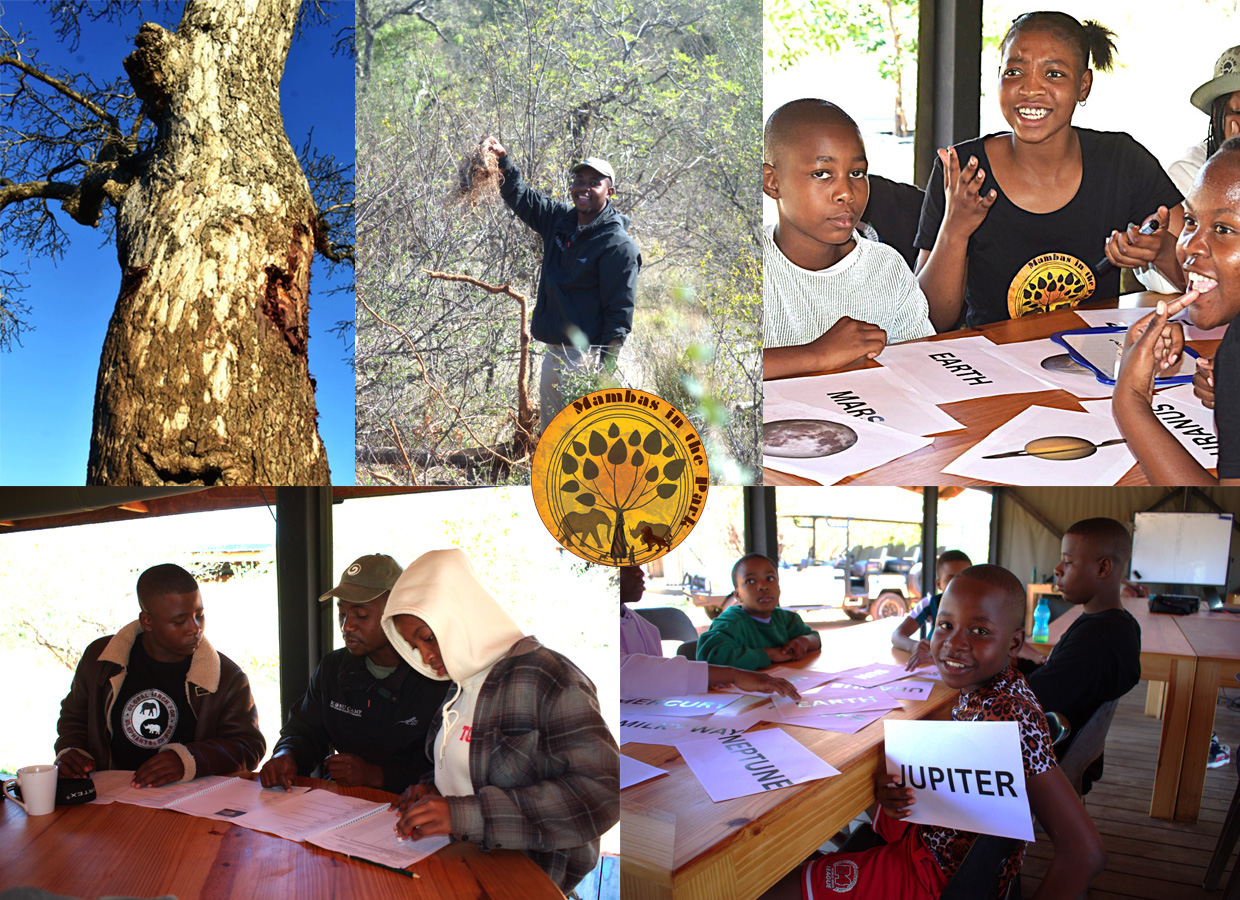
Perhaps one of the most rewarding moments was seeing how the students’ understanding of our Solar System changed during the lesson.
One student had thought that the phases of the Moon were caused by the seasons. By the end of the class, she had learned that the Moon’s phases occur because, as the Moon orbits Earth, we see different portions of its sunlit half.
This is exactly why environmental education matters, even when students have encountered some of these topics at school. Learning a fact once does not always mean understanding it. Sometimes, a new explanation, a practical demonstration, or simply the chance to ask questions in a relaxed environment makes everything fall into place.
Taking learning outside the traditional classroom gives young people room to explore, connect ideas, and build confidence in their own understanding.
As our youth leader Lunghisani put it:
“I now feel more confident to stand in front of other people and talk about the stars and the moon phases.”
Gaining knowledge is one thing; feeling confident enough to share it with others is another.
From the sky to the wild bush
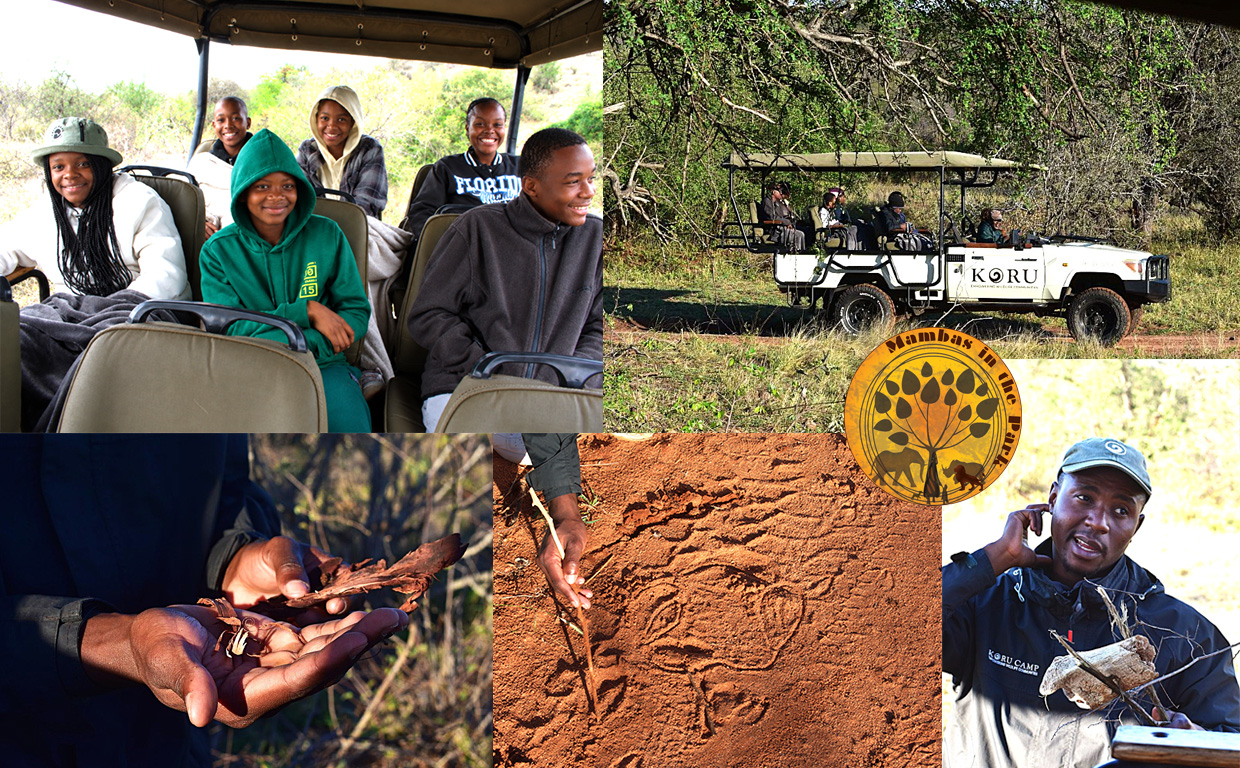
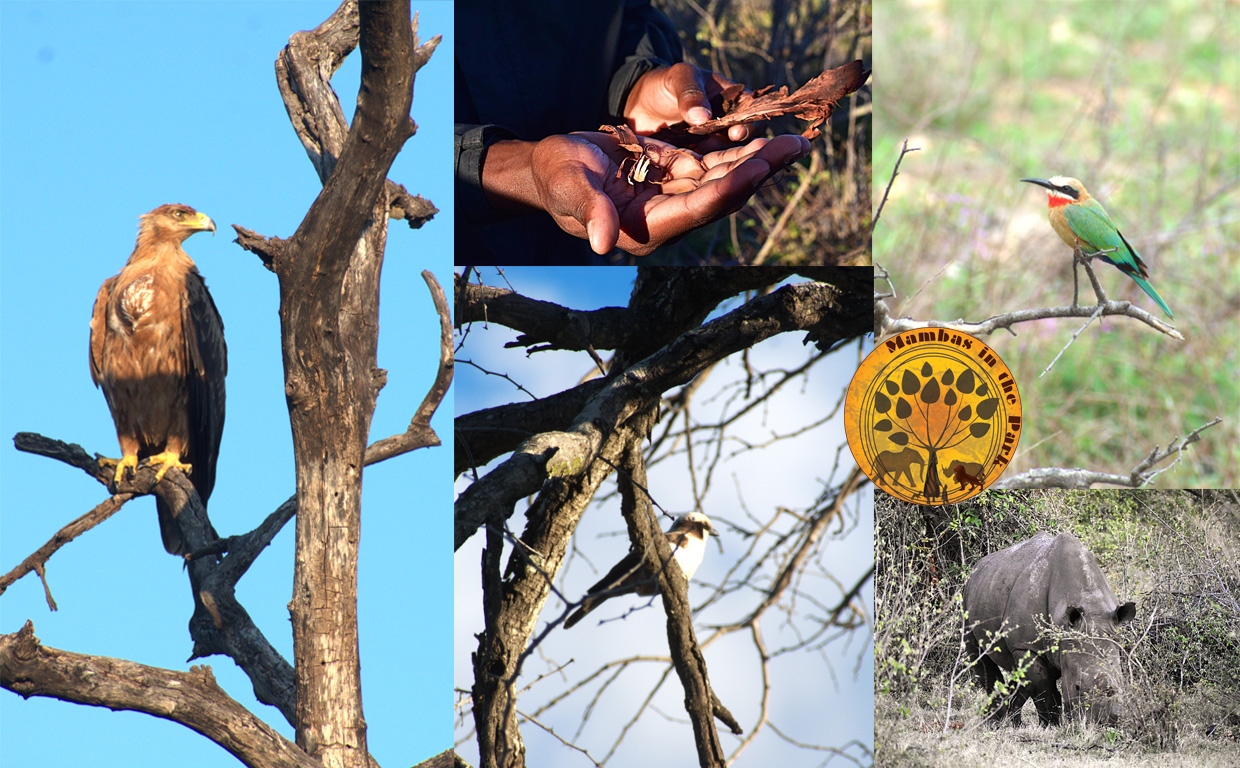
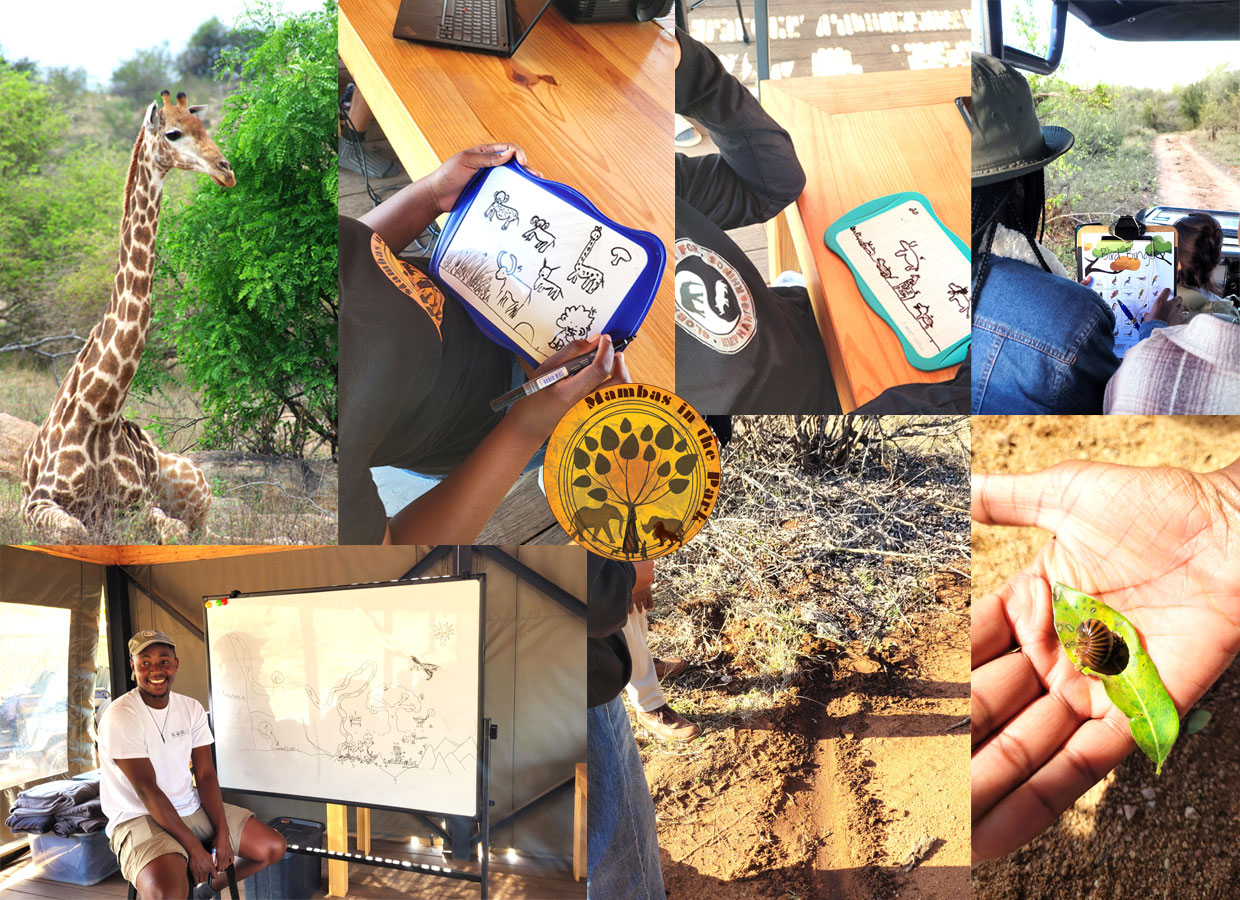
Our evening game drive was special in its own right. We spotted birds and watched a tower of giraffes peacefully feeding on the leaves of trees. As always, the bush offered us more than beautiful sights — it gave us questions to explore.
Felice, Koru volunteer from China who was practising her guiding skills, shared an interesting fact about giraffes: their tongues are darkly pigmented, which may help protect them from the intense African sun as they feed on leaves high in the trees.
Koki then shared another fascinating observation about giraffe feeding behaviour. Giraffes can move between feeding areas rather than repeatedly browsing the same trees. Plants can respond to browsing by producing defensive chemicals that make their leaves less palatable, although the precise responses vary between plant species.
It was a wonderful reminder that what looks like a simple activity — an animal eating leaves — can involve a much more complex relationship between plants and animals.
Nature is full of these intricate connections. The more closely we look, the more we discover.
And there is something truly special about experiencing it all in the bush: watching wildlife, taking part in interesting workshops, looking up at the stars, and then retreating to your tent for the night while listening to the distant call of a leopard.
Some experiences are difficult to recreate anywhere else.
A sunset, a handful of sand, and a change in perspective
We wrapped up our evening game drive with a visit to the riverbed, where we sat on the white sand and had another go at attracting magnetite with a magnet. It really is fun! We also enjoyed some tea and biscuits while watching the sun set over the landscape.
But after our astronomy workshop, even a sunset feels different.
We usually think of sunsets and sunrises as beautiful moments at the beginning or end of the day. And they are. But imagine watching the Sun slowly disappear behind the horizon and realising that it isn’t the Sun moving away from us. It is the Earth rotating, turning our part of the planet away from the sunlight.
It is such a simple concept, yet once you really take it in, it changes your perspective. The landscape hasn’t changed. The sunset is just as beautiful as before. But suddenly, you are looking at it differently — aware that you are standing on a rotating planet, travelling through space, as the world around you moves from daylight into darkness.
Astronomy doesn’t just teach us about distant stars and planets. It changes how we experience the world right here on Earth.
An early start and another unforgettable game drive
The next morning began at 5:30 am. By 6:00 am, tea and coffee were ready, and everyone gathered at the study area with a warm drink in hand.
While the group woke up properly, Koki checked the FGASA tests completed by our youth leaders. Another step in their learning journey was done — and now it was time to head back into the bush!
The morning game drive did not disappoint.
We identified the Moon’s phase, which was still in its last quarter, connecting our astronomy lesson with what we could actually observe in the sky. Then came another remarkable wildlife encounter: we saw rhinos twice!
We also witnessed a dramatic moment as a buffalo was being chased by a male lion. What a magnificent animal the lion was. After the chase, he stood watching the buffalo he had failed to catch before deciding that a nap beneath a shady tree was a much better use of his morning.
It was an unforgettable sight — and another reminder that, in the wild, every encounter offers a glimpse into the lives and behaviours of the animals sharing this landscape.
A little elephant attitude — and another Big Five day!
We also came across a herd of elephants, including a little elephant who clearly wasn’t entirely happy about us driving around nearby. He shook his head and made sure we knew exactly how he felt about our presence.
Fair enough, little one!
Nearby, his mother was busy feeding in the bush. And we couldn’t help imagining how proud she might be to see her youngster learning to stand up for himself. Of course, we can’t know what she was thinking, but it was a lovely moment to observe a young elephant beginning to show his own character.
And the wildlife sightings kept coming. Four of the Big Five in a single morning — are we lucky in October, or what?
After breakfast, it was time to turn our attention from observing the bush to understanding how it works.
Ecology: understanding the connections in nature
Ecology can be a complex subject, but we designed our workshop to help the youth leaders grasp its most important concepts in a practical and accessible way.
We explored food chains and food webs, looking at how energy moves between organisms and how different species depend on one another. We also discussed symbiotic relationships — including mutualism, commensalism and parasitism — to understand the different ways organisms interact.
Another key topic was the classification of organisms according to their roles in an ecosystem:
Producers, such as plants, make their own food, using energy from sunlight.
Consumers obtain energy by eating other organisms. These include herbivores, carnivores and omnivores.
Decomposers, such as fungi and many bacteria, break down dead organic matter and help return nutrients to the environment, where they can become available for other organisms to use.
These concepts help us see that nature is not simply a collection of individual animals and plants. It is a network of relationships, with energy flowing through ecosystems and nutrients being recycled. Every organism plays a part, and changes affecting one species can have consequences for others.
Understanding these connections is an important step towards understanding why conservation matters.
Guide Koki’s Science Lab: The Power of Plants
As part of our ecology workshop, Guide Koki invited us into his very own Science Lab for a fascinating hands-on experiment! The children took three cut-open plastic bottles, each filled with a different ground cover: one with bare soil, one with soil and growing grass, and one with soil covered by leaves and branches. We poured water into each bottle and collected the runoff in cups attached to the bottle necks. The results helped us explore how vegetation affects the water flowing through the soil. The bottle with bare soil was expected to produce the muddiest water, while the grass-covered soil would ideally produce the clearest. The lesson? Plants do much more than make our surroundings green and beautiful. Their roots help bind the soil together, reducing erosion, while vegetation and the soil beneath it can help trap sediment and filter water as it moves through the ground. It was a simple experiment with a powerful message: protecting vegetation means protecting our soil, our water and the ecosystems that depend on them.
Learning today, shaping tomorrow
The FGASA learning journey is not only about gaining knowledge of wildlife and the environment. It also requires commitment, independent study and the confidence to keep learning.
“Studying with my FGASA manual helps a lot,” says Acacia.
Lunghisani also reflected on the importance of working towards his future:
“I study hard because I think of my future. And an inspirational message in my manual reminds me that my future is in my hands.”
His words capture something important about environmental education. We want young people to understand the natural world, but we also want them to recognise their own potential to shape their futures and contribute to conservation.
Every new concept understood, every presentation delivered with greater confidence, and every question asked is another step forward.
Growing together
We couldn’t have done it all without our wonderful guides, Koki and Beki. Their knowledge, encouragement and willingness to share their experience made the camp what it was.
October was particularly special because we were joined by a volunteer Felice and intern Rememberence — who contributed to conservation activities, workshops and our learning throughout the camp. Different experiences and perspectives came together, creating even more opportunities for everyone to learn from one another.
Koki has been part of our journey for a long time, and it was especially meaningful to hear his reflections on the young leaders’ progress:
“Firstly, it’s such an honour to be one to witness the bush knowledge growth in both Lunghisani and Acacia, not forgetting how they inspired our student Hope and also our Koru intern Rememberence to also want to learn more about the natural dynamics of the African Savanna.”
For us, this is what makes the journey so rewarding. Learning spreads. When young people become curious, confident and eager to understand more, they can inspire those around them to do the same.
Throughout the camp, it was wonderful to see our students growing and maturing, taking responsibility and learning to lead with grace. Even the smallest changes became noticeable.
We now all fold the game drive blankets and put them neatly back into the storage containers. It might seem like a small thing, but these everyday habits matter. The little things we practise repeatedly become patterns that shape how we approach responsibilities, work with others and handle situations later in life.
Watching these young people make progress and take ownership of their development is genuinely heartwarming. They inspire us to keep learning, too, so that we can bring even more knowledge, opportunities and support to them and to the wider group.
And that is the beauty of this journey: we are not only helping young people learn about the natural world. We are learning alongside them.
To everyone supporting this journey, thank you for helping make these experiences possible. And to our youth leaders: keep looking up at the stars, looking closely at the world around you, and trusting that what you learn today can help shape what you do tomorrow.
 |
 |
 |
 |
 |
|
Mambas in the Park is GMFER initiative with partnership and support from Transfrontier Africa.. Our thanks to KORU Camp and its dedicated guides and staff for amplifying our work.
Every problem has a solution, every solution needs support.
The problems we face are urgent, complicated, and resistant to change. Real solutions demand creativity, hard work, and involvement from people like you.

Stay in the know.
Be ready to act.
To keep up to date with our latest news, events, marches,
campaigns and fundraising activities.